


When we look at how women in the music industry evolve year over year, one of the first places people turn to is data, because numbers don’t just reveal trends, but give a glimpse into the direction the industry is heading. We see that with the percentage of GRAMMY nominations, the number of women producers, songwriters, etc, across gender representations throughout the industry.
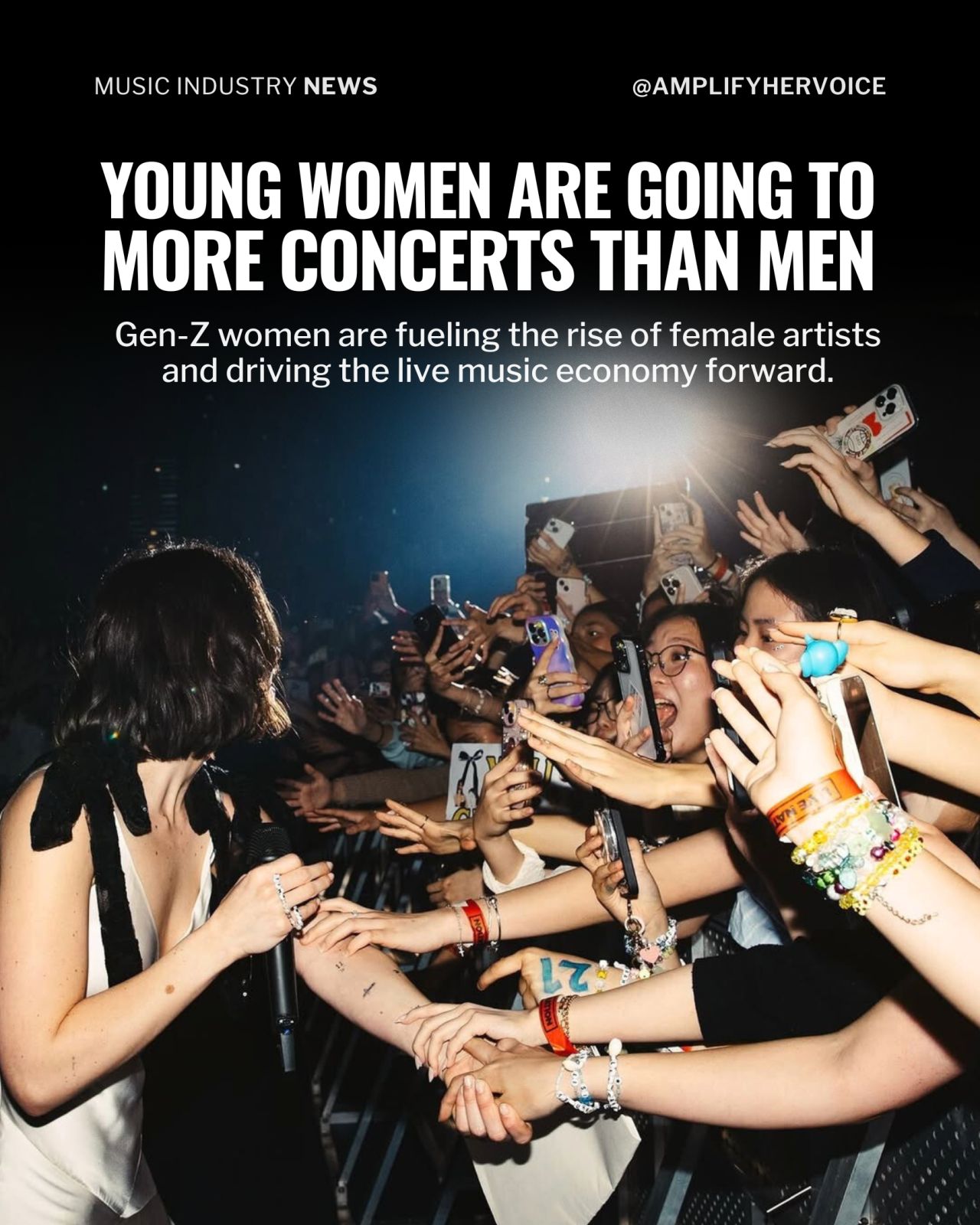
Recently, as I was scrolling on Instagram, I came across a post from Amplify Her Voice, one of the leading champions of gender equity in music. One of their focuses is to spotlight the statistics around the gender disparity of the music industry. Their most recent post highlights a recent study from Luminate, which found that Gen Z is the only generation where women consistently outnumber men in live attendance.
So what does that actually look like? Well, I went to the study to see for myself.
In the latest wave of data captured, from Q1 2023–Q1 2025, the average percentage by quarter of Gen Z women attending concerts is 23% compared to Gen Z men at 16%. The data shows a clear, pointed shift within the industry.

Part of this can be traced to the surge of women-fronted pop tours dominating the last few years. Taylor Swift, Olivia Rodrigo, Chappell Roan, Sabrina Carpenter, and Beyoncé all contributed to a cultural moment that made live music feel like a global event again. And while women have undeniably led this resurgence, we also can’t overlook male artists like Harry Styles, whose Love on Tour, in my opinion, set the tone for the post-pandemic surge we’re experiencing now.
The desire for live music has grown beyond the artists themselves, evolving into a fully immersive, communal experience. Fans dress in outfits inspired by their favorite eras, chase friendship bracelets, make signs, theorize about surprise songs, easter eggs, and treat concerts as a space for true connection and belonging.
So, yes, the data speaks, and what’s exciting now is that women are shaping the future of live music in real-time.
For more like this, follow Amplify Her Voice, who continue to spotlight the data behind gender equity across the music industry.


